
The Tata group is planning to invest $90 billion in new industries such as mobile components plant, semiconductor, electric vehicles, batteries, renewables energy and e-commerce by 2027. The Tata group's investment in India is far higher than the $75-billion investments planned by Mukesh Ambani-owned Reliance Industries and $55-billion investment planned by the Adani group in the next five years in the country, the Economist reported recently. The investment by the Tata group is a shift in its strategy to focus more in the home markets instead of international markets where the group lost money.

As part of its road map to achieve 100 per cent dependence on renewable energy by 2025, Amazon on Wednesday announced its first utility-scale renewable energy projects in India - three solar farms located in Rajasthan. These include a 210-megawatt (Mw) project to be developed by India-based developer ReNew Power, a 100 Mw project to be developed by local developer Amp Energy India, and a 110 Mw project to be developed by Brookfield Renewable Partners. By the end of 2021, the company had reached 85 per cent renewable energy across its business.

Russian traders have started asking for payments in ruble for their exports to India in a move that could derail trade between the two countries which gathered pace after the war in Europe. This is because Indian importers are unable to pay in ruble. The India-Russia trade gathered pace after Vladimir Putin invaded Ukraine in February this year. In the April-June quarter, India's imports from Russia were valued at $9.27 billion, up 369 per cent year on year.
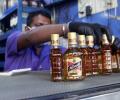
Kerala is likely to witness all-time high liquor sales this Onam, the harvest festival, with the season already reporting a 30 per cent hike. According to the Kerala State Beverages Corporation (BevCo), the first few days of this Onam season have set the tone for record sales. "During last year's Onam season, our sales were around Rs 561 crore. This year, we expect it to be over Rs 700 crore," said Yogesh Gupta, chairman and managing director, BevCo.

Ford India has offered a "final revised severance package" for its employees at the Chennai unit, which is on average equivalent to 130 days of gross wages per completed year of service. The company said this was rolled out in the absence of any suitable alternative buyer. As part of the earlier package, employees were offered 115 days of gross wages for each completed year of service, which was later revised to 124 days.

If that happens, India's economic size will be just shy of $20 trillion and its annual per capita income will be about $10,000, when the country celebrates its centenary of independence.

On February 24, when Vladimir Putin announced a military operation on Ukraine, few would have thought that Indian government-owned GAIL India would feel the impact. The tensions over gas supplies were essentially a Europe-Russia problem, related to the sanctions western economies imposed on Moscow. But the EU depends on Russian imports for 40 per cent of its gas stocks, an over-dependence that Russia has underlined with Kremlin-owned Gazprom cutting its supplies through the Nord Stream 1 pipeline to 20 per cent, citing maintenance issues.

The average salary received by students during campus placements for 2021-2022 was Rs 21.48 lakh per annum. The highest salary offered was $250,000.
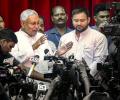
Various indicators make it amply clear that there are grave challenges facing the new government of Chief Minister Nitish Kumar, reports Indivjal Dhasmana.
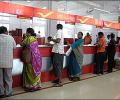
The staff at post offices misappropriated Rs 95.62 crore of public money between November 2002 and September 2021, the Comptroller and Auditor General has said. The money may seem small but it is what common citizen invested in post office savings, the oldest and the largest banking system in the country. The system serves the investment needs of urban and rural clients through schemes such as savings bank, recurring deposits, time deposits, national savings certificates, kisan vikas patras, public provident fund, monthly income account scheme, sukanya samriddhi accounts and senior citizens savings scheme.

India's plan to produce ethanol from second-generation (2G) sources -- mainly farm waste -- is taking time to materialise even as the government is set to dedicate to the nation on Wednesday a Rs 900-crore plant set up by Indian Oil Corporation (IOC) in Panipat. Though state-run oil companies had decided to set up at least 12 plants in 2016-17 with an investment of around Rs 10,000 crore, this will be the first unit coming on track while others are stuck in various stages owing to issues like capital expenditure, lack of feedstock, and high rates of finished products compared to traditional ethanol units. According to industry sources, three more second-generation plants are coming up.

Income-tax payers fear they will receive notices from the government because the annual information statement (AIS) provided by the I-T department in many cases is showing incomes in excess of their earnings. The Central Board of Direct Taxes (CBDT) has dismissed these fears as unfounded. The deadline for filing income-tax returns (ITRs) for the assessment year 2022-23 ended on July 31.
The impact of fiscal measures announced by the government to contain inflation will be seen in the next few months because of the base effect, reports Indivjal Dhasmana.

June was a memorable month for the 101-year-old Tamilnad Mercantile Bank (TMB). Last month, the Thoothukudi-based bank witnessed two new landmarks in a history in which the last three decades could easily qualify for a Kollywood blockbuster.
Moody's Investors Service has warned that India, along with the Philippines, Thailand, and Vietnam are highly vulnerable to volatile food and energy prices in the Asia-Pacific region as the Russia-Ukraine conflict continues to disrupt supplies and raise the cost of agricultural products, especially cereals and vegetable oils, as well as fertilizers and other agricultural inputs. This is so because these countries have a higher weighting of energy and food prices in their consumer price index (CPI) baskets, Moody's said in its report released on Tuesday. The weighting of energy and food in overall Indian CPI stands at over 55 per cent.

A single application and a plethora of services for passenger cars - that is what myTVS, a brand that operates under Ki Mobility Solutions and is part of the TVS family, is set to bring to customers, in a bid to disrupt the concept of "super apps" in India. Starting July 15, myTVS will launch its connected car platform or super app called myTVS Life360 for aftermarket passenger cars. Through it, customers will be able to avail themselves of a range of services like maintenance, diagnostics, roadside assistance, accessories, payments, insurance, and so on.

Tamil Nadu secured investments worth Rs 1.44 trillion on Monday by signing of memoranda of understanding (MoU) with 60 companies, laying of foundation stones and inauguration of new projects.

Employees at Ford India's Chennai unit have called off the strike that started on May 30. Following this, the company has revised its severance package from earlier 115 days to 121 days for employees supporting production. The company indicated it would continue 'constructive discussions' with the unions in order to sweeten the deal further, if required.

White-lipped tamarin is a type of monkey that lives in the Amazon area of Brazil and Bolivia. Prevost's squirrel is a colourful species from the forests in the Thai-Malay Peninsula and nearby islands. Sugar gliders are tiny marsupials - 6.3 to 8.3 inches in length - native to Australia.

The Union government will take a bit longer to introduce the much-awaited labour codes even as the majority of states and Union Territories (UTs) have framed rules on them. There were speculations that these would be introduced from July 1. While 30 states and UTs have framed rules on the code on wages, 25 of them have done so on industrial relations. Of the two remaining codes, 24 states and UTs have framed rules on social security and 23 on occupational safety, health, and working conditions (OSH), sources said.
 © 2026 Rediff.com - Advertise with us - Disclaimer - Privacy Policy - Sitemap - Feedback - About us - Terms of use - Grievances